Catfish production can generally be categorized into two approaches: natural propagation and controlled production under human management. While natural propagation occurs when catfish breed on their own in open water systems under favorable environmental conditions, it often presents challenges such as low survival rates, predation, and limited control over breeding cycles. At Jumbo Fish Farm, we specialize in controlled production, a more reliable and efficient approach that allows every stage of the propagation process to be managed with precision and consistency.
Our process is rooted in artificial propagation, a modern aquaculture practice that supports high-quality and large-scale production of catfish seed. The process begins with proper broodstock management, where brood fish are provided with high-quality feed in the right quantities to promote strong gonadal development and quality egg production. Careful selection of healthy and mature broodstock then follows, based on phenotypic characteristics. Females are identified by their swollen, soft abdomen, while males are selected based on the presence of a pronounced genital papilla. Ideally, females range between 500–800 grams, while males are preferably around 1 kilogram in weight.
Selected broodstock are conditioned in separate holding tanks to minimize stress and injuries that could negatively affect spawning performance and egg quality. Induction is then carried out on the females using commercial hormones or pituitary extract to stimulate ovulation. Water temperature is carefully regulated using thermostats and maintained at approximately 27°C to optimize the spawning process. Under these controlled conditions, induced females are typically ready for spawning after an 11–12 hour latency period.
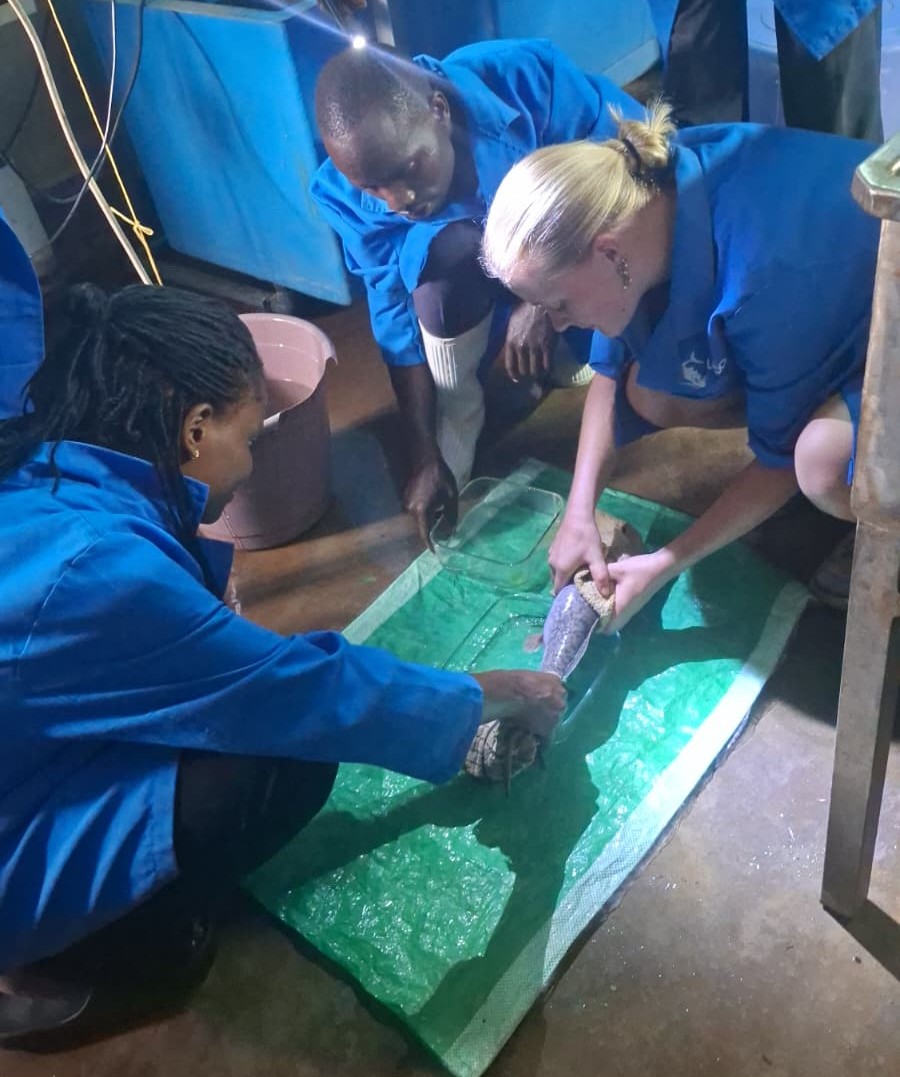
Since the process is fully controlled, fertilization is performed externally. Eggs are carefully stripped from the female broodstock into a clean bowl, while milt is obtained from the male gonads by making slight lacerations and gently pressing to release the milt. At Jumbo Fish Farm, we primarily adopt the wet fertilization method because of its effectiveness in improving fertilization success and ensuring better handling of delicate catfish eggs during propagation.
In this method, a saline solution is added during fertilization to activate and maintain sperm motility for a longer period, allowing better interaction between the sperm and eggs. This increases the chances of successful fertilization and promotes more uniform egg fertilization. The saline solution also helps reduce mechanical stress and damage to the eggs during mixing, which is particularly important in maintaining egg quality and maximizing hatchability. Compared to dry fertilization, wet fertilization provides a more controlled and consistent fertilization environment, making it highly suitable for intensive catfish hatchery operations where high survival and hatch rates are a priority.
The fertilized eggs are then gently spread onto clean, well-aerated hatching trays. Proper distribution is critical to avoid egg clumping, which can reduce oxygen circulation, increase egg mortality, and compromise water quality. The eggs are incubated under optimal conditions, with temperatures maintained between 25–28°C. Under these conditions, hatching typically takes place within 24–36 hours. Throughout incubation, close monitoring is conducted to remove dead or unfertilized eggs and maintain a healthy hatching environment.
Once hatching occurs, the trays are carefully removed, allowing the delicate larvae to swim freely into aquarium tanks where they continue developing under controlled conditions. This marks the beginning of the nursing phase, a critical stage for ensuring high survival and healthy growth. At this stage, the fry are treated preventively against fungal infections to minimize disease outbreaks.
For the first three days after hatching, the fry depend entirely on their yolk sac for nourishment and therefore do not require external feeding. During this period, emphasis is placed on maintaining optimal water quality, proper aeration, and minimal disturbance to reduce stress and mortality.
Once the yolk sac is fully absorbed, the fry become active swimmers and begin external feeding. They are introduced to high-protein starter feeds containing up to 62% crude protein, specifically formulated to meet the nutritional demands of early-stage fry development. Feeding is carried out in small but frequent portions, especially during the early growth stages, often at intervals of approximately two hours. Feeding frequency and quantities are gradually adjusted as the fry grow. This feeding strategy supports rapid growth while helping maintain good water quality.
By maintaining strict control over every stage; from broodstock management and induced breeding to egg incubation, hatching, and fry nursing; Jumbo Fish Farm consistently achieves high hatchability, improved survival rates, and the production of strong, uniform fingerlings. This controlled production approach not only enhances operational efficiency but also ensures a reliable supply of high-quality catfish seed to meet the growing demands of the aquaculture industry.